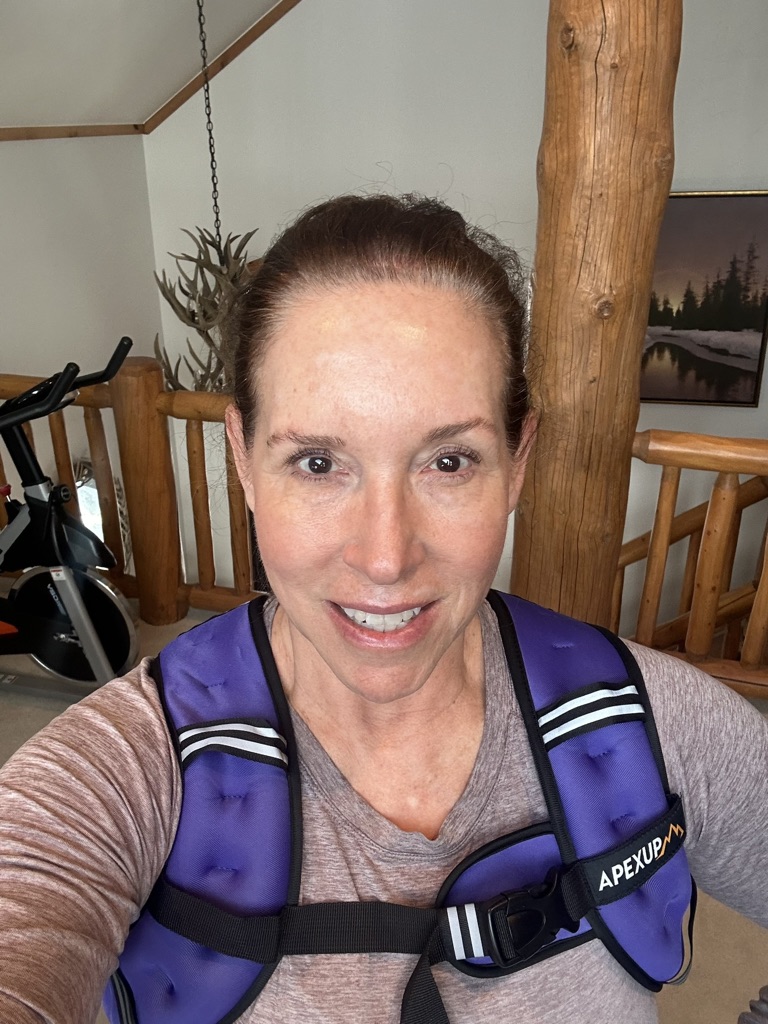
I’ve been committed to fitness on some level most of my life. I was a competitive swimmer from age 8 through high school. In college, I was active with aerobics classes and running the stairs in the stadium with my friends. Yeah, that one really shocks me, too.
As a younger adult, especially entering motherhood, I tried to maintain an exercise routine but struggled with consistency. I guess you could say I was “sporadically fit” between the ages of 30 and 47. Then, when I was 47 and diagnosed with a brain tumor (which you can read about here), I wanted to go into my surgery in the best possible shape. So, I hit the gym hard. I dove into strength classes, HIIT classes, and spin classes. I fast-walked about 20 miles a week. And, honestly, at the age of 47, I could handle it. I would get sore sometimes, but overall, I felt amazing.
Well, friends, I’m not 47 anymore. Even though those nine years have gone by in the blink of an eye, and I might feel 47 mentally, my body reminds me every day that it is 56.
So I’ve been trying, in vain, to maintain my old pace, often beating myself up along the way for falling short. I’ve had the mindset that a workout doesn’t count unless I am dripping in sweat. But, I’ve also been sore, stiff, and achy. I’m experiencing intermittent fatigue that has really been kicking my butt. I’ve been sidelined from working out quite a bit this winter due to minor injuries. And then it hit me! Could I be pushing myself too hard?
I have seen many reports and studies on the tremendous benefits of “gentler” exercise for women as we age. But . . . and you’ll love this . . . I didn’t think it applied to me. It’s often said that nurses make the worst patients, and in this case, I’d like to introduce myself as Exhibit A. Okay – Hi, I’m Chris, and I’ve been ignoring something that has been staring me in the face.
So, Friends, I present to you my light-bulb moment, my epiphany, the piano dropping on my head . . .
Working out harder is NOT always better.
In fact, intense workouts can spike cortisol levels. Now this spike in cortisol in younger athletes is part of a normal adaptation to the stress that the workout is producing. However, in menopause, recovering from the cortisol spike can be harder and take longer. Which leaves us more exposed to the inflammation that is caused from . . . exposure to cortisol.
Maximum Aerobic Function (MAF)
MAF is a low-intensity training method centered around improving the body’s ability to burn fat efficiently while minimizing stress on the body. The key is training at or below a personalized heart rate threshold—your MAF heart rate—which is calculated using this formula:
180 – your age = your MAF heart rate
From there, you’ll make small adjustments based on your health and fitness history. For example, if you’ve been chronically stressed, are recovering from illness, or are just getting back into exercise, you may need to subtract 5-10 beats from your number.
So for me 180 – 56 = 124. The truth is that most of my workouts have been in the 150 to 160 range for sustained periods of time. This has exposed me to:
- Increased cortisol levels, resulting in inflammation
- Increased Fatigue
- High risk of injury
- Disruptions in metabolism
- Blood Sugar Instability
Working Out In Your MAF Zone
You’ll need to use a heart rate monitor to ensure you’re staying in your appropriate range while you walk, bike, swim – whatever strikes your fancy. This may feel really slow and easy for you at first. Trust the process. As you and your heart adjust to this type of workout, your aerobic capacity expands you’ll find that you can increase your speed and intensity while keeping your heart rate in your ideal aerobic zone.
Training at or below this heart rate keeps your body in the aerobic zone, which promotes fat-burning, stabilizes blood sugar, and reduces the secretion of cortisol.
Because science backs it as a critical component for healthy aging,
I am still going to make strength my priority.
(Also because being strong makes me feel like a badass.)
But I can do two things at once!
I can lift weights, build my strength AND allow my heartrate to recover between sets.
I can enjoy my walks and bike rides, at an easier pace, knowing that I’m doing myself and my heart a big favor.
Benefits of MAF Training in Menopause
By focusing on low-intensity exercise within your individual aerobic zone , MAF offers a gentler yet highly effective approach that works with your body during menopause, rather than against it. This approach isn’t just about fitness; it’s about finding your body’s sweet spot for
- sustainable energy
- improved metabolic health
- a calmer, more centered mindset
Hormonal fluctuations—especially the drop in estrogen and progesterone—affect how the body responds to exercise and stress. Here’s how MAF helps:
- Optimizes Fat Burning: By staying within your aerobic zone, your body becomes more efficient at using fat as its primary fuel source. This can also improve metabolic flexibility – your body’s ability to switch between burning fat and carbohydrates for energy.
- Preserves and Builds Lean Muscle Mass: Consistent low-intensity exercise still stimulates muscle protein synthesis, especially when combined with adequate protein intake. This helps combat age-related muscle loss and supports overall strength. I still recommend strength training with weights! These symbiotic approaches will give us stronger results.
- Reduces Stress and Cortisol Levels: High-intensity exercise can trigger the release of cortisol. MAF training is less taxing on the nervous system, which helps to regulate cortisol levels and promote a sense of calm.
- Improves Cardiovascular Health Without Overstressing the Body: Consistent aerobic activity within your MAF zone strengthens your heart and improves circulation with a lessening of the risk of overtraining or injury.
- Enhances Energy Levels: Because it harnesses maximum efficiency, MAF can lead to more sustained energy throughout the day and help to counter the fatigue that most of us face in menopause.
Wrapping Up
MAF isn’t flashy. It’s not going to leave us dripping in sweat or gasping for air. But what it does do is work with our bodies—not against them. My hope is that it will help me to reconnect with movement in a way that feels sustainable, instead of feeling beaten down.
My intention is to lean into this gentle, heart-rate-based approach to exercise, and hopefully notice a shift. More energy. Better recovery. Less stress on my body.
It may have taken a proverbial piano dropping on my head, but I’m excited to lean into this new approach. I’ll keep you posted on how it goes! If you have any questions or recommendations, please share them in the comments!!
Have a great Monday, Friends!
Happy to be linking up with: Between Naps on the Porch, Sunshine and Books, Sticky Mud and Belly Laughs, Slices of Life