
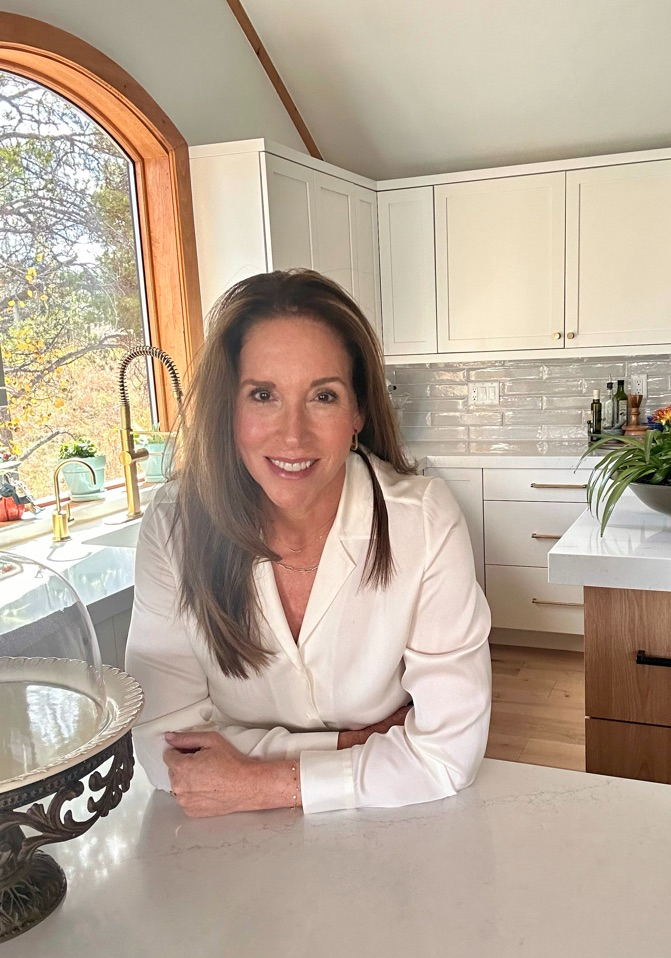
Elevated Nesting focuses on healthy aging for women, with the primary goal being not just to survive but to thrive in midlife. We can’t address thriving in midlife without addressing perimenopause and menopause and the enormous impact hormonal changes have on our physical health, mental health, and overall sense of well-being. I find it very helpful to hear women’s personal stories about menopause symptoms, treatments they’ve tried, what’s worked and what hasn’t. That’s one of the reasons I created this community.
So today, I’m sharing my journey with Hormone Replacement Therapy (HRT) from the start . . . to where I am today. I’m breaking down my health history, the steps I took to make my decision, and what I’m doing to give myself peace of mind.
My Health History
I started having perimenopause symptoms around age 42 (sleep issues and night sweats that I associated with PMS). I just turned 56, and I’m still perimenopausal, meaning I have not gone a full 12 months without having a period. For the past two years* (with a new asterisk that I’ll discuss in a bit), I have had a period every 6 months . . ugh. So, as of my birthday a couple of weeks ago, I am officially in the category of “late-onset menopause”. This isn’t necessarily a bad thing, but there is a slight increase in the risk of breast, endometrial, and ovarian cancer associated with starting menopause at a later age.
My mom is a breast cancer survivor, so I believed, and until recently, most of my doctors agreed that I should avoid HRT.
I also had a meningioma brain tumor, which I wrote about here. My neurosurgeon said I should avoid HRT. Until this summer, I never considered HRT as an option for myself.
We each have unique medical histories and family health histories. Some conditions or factors in personal health completely preclude utilizing HRT in any form. Other conditions or histories may require us to “proceed with caution” with HRT. And still, others may give us the green light to utilize HRT without any concerns.
Factors that Led me to Try HRT
So, now you may be asking, “Why on earth did you change your mind?”. Believe me, I did not take this decision lightly. Many. . . many factors led up to my choice to conservatively start HRT. I’ve broken them down into four categories.
1. My Symptoms
As we know, there are a myriad of symptoms related to menopause. Some are minor annoyances, and others are severe and life-altering. I can’t name one or two symptoms that were the catalyst for considering HRT. It was the combination of all I was experiencing and how they impacted my quality of life. These were the primary symptoms I experienced:
- Poor Sleep Quality – this was a really big issue for me. And frankly, at times, it continues to be. The more I have learned about the impact of sleep on our mental health, immunity, and brain health the more I am convinced that adequate quantity and quality of sleep is crucial to our health and well-being.
- Joint Pain – I have joint issues to begin with, but last winter, it was as if a switch was flipped and my pain level dramatically increased. Despite my anti-inflammatory supplements, my ankles, knees, and left hip were constantly aching and affecting my mobility.
- Brain Fog – this was a tough one for me. I can live with the occasional lapse, but I started to feel really spacey and was experiencing ADD symptoms (inability to focus and feeling very scattered).
- Hot Flashes – The frequency and severity of these vary from woman to woman and, in some cases, can be debilitating. For me, my hot flashes were a big nuisance, but I don’t know if I would have sought HRT if that were my only symptom.
2. Targeted Actions for my health history:
First Degree Relative (Mom) with Breast Cancer
- I knew that my mom was negative for the BRCA1 and BRCA2 genes, but as of now, 110 genes have been found to have a link to breast cancer. So, last Spring, I had bloodwork done at my OBGYN’s office for the most up-to-date genetic test related to breast cancer. Two weeks later I learned that I am negative for all of those genes (meaning I do not have them). Does this mean I will not get breast cancer? No. However, it is factored into my personal risk assessment.
- I am proactive with my breast screenings. Will these prevent breast cancer? No. But they should allow for early detection, which is critical.
- Monthly self breast exams
- Annual screening mammogram
- Annual breast MRI (performed six months after my mammogram)
There are a variety of genetic tests available. Some you can do through your doctor, others you can order online. Mine cost $200. Thanks to the Genetic Information Nondiscrimination Act, Health Insurance companies are prohibited from denying coverage, increasing rates, or treating the results of genetic testing as a pre-existing condition.
History of Meningioma
- I have had an MRI every year since my brain tumor was removed, and there has been no sign of re-growth. I will continue to do this annually, probably for the rest of my life.
3. Consultations with my Physicians:
- When we moved back to Colorado, I found a new OBGYN, and she is the best I’ve ever had.
- She listens thoroughly and then presents all of my options. She never makes me feel rushed, so we can discuss all of my questions and concerns.
- She gives me the space to do my research and then circle back with her to ask more questions and decide on strategies.
- Having a physician like this is a big factor in my feeling comfortable with my HRT plan.
- I sought a second, and in my case, third opinion.
- I met with my primary care physician (who is also fantastic!). We reviewed my history and test results, and she concurred with the HRT plan I had selected with my OBGYN.
- I met with my new neurosurgeon, who I follow up with annually, to review my newest brain MRI.
- My neurosurgeon had said at my 2023 visit that I could reduce my frequency of MRIs from one per year to one every two years.
- When I expressed my interest in exploring HRT, he recommended I continue with annual MRIs.
- Additionally, he wanted to ensure that I was utilizing a form of HRT that could be quickly reversed should a problem arise. This was already a part of the conservative plan that I wanted to take, and I felt encouraged that all of my physicians were on the same page.
If you are struggling with your current physician, please read my article “Is it time to Break up with your OBGYN?”. In it, I discuss parameters that you can use to assess the qualities that may be important to you in choosing a healthcare provider. It also includes resources for finding excellent providers who specialize in Perimenopause and Menopause. .
4. My Personal Research
As a nurse, I have been trained to make my practice with patients evidence-based. This means that everything I do in treating a patient is tied to the most up-to-date medical data and adheres to best-practice methods. I use this same mindset in approaching my own health, and this requires research.
In my article, “Hormone Replacement Therapy, Why is there so much Conflicting Information?”, I discuss the history of HRT and some of the root causes of the misconceptions and fear that so many of us have about it. It is important to understand this history so we can view the newest data from HRT research with an open mind. What this data is demonstrating is that while HRT is not without some degree of risk, there are proven benefits to supplement estrogen that must be considered.
We know that HRT treats many of the common symptoms associated with menopause, including hot flashes, sleep problems, mood support, and vaginal discomfort. Additionally, Estrogen is directly linked to benefiting multiple systems in our bodies. Here are my top three proven benefits of replacing estrogen in menopausal women:
- Brain Health
- Estrogen is a neuroprotective agent that has been shown to protect our brains from:
- the effects of oxidative stress (which results in loss of neurons)
- the adverse effects of amyloid proteins – related to Alzheimer’s Disease.
- the prevalence of Alzheimer’s is greater in women than in men, and has been linked to diminished amounts of estrogen.
- Estrogen aids in the growth and repair of brain cells.
- Estrogen is a neuroprotective agent that has been shown to protect our brains from:
News – Medical Life Sciences, link to article
- Cardiovascular Health
- The leading cause of death for women is heart disease.
- Estrogen has been shown to help our cholesterol ratios: raising HDL (good cholesterol) and lowering LDL (bad cholesterol).
- Estrogen is a vasodilator, which means it relaxes and opens our blood vessels, allowing for good blood flow.
- Estrogen has strong anti-inflammatory properties, which work throughout our bodies. (Trust me on this – chronic inflammation is the root of soooo many disease processes). As it relates to heart health, reducing inflammation in our blood vessels helps to prevent atherosclerosis (build-up of plaque in our arteries).
Cleveland Clinic, link to article
- Musculoskeletal Health
- Lack of estrogen is a major factor in the development of osteoporosis.
- Estrogen has protective and anti-inflammatory properties that support joint health and reduce pain.
National Library of Medicine, link to article
For the purpose of this article, I chose my “top three” systems that benefit from estrogen. Additionally, data shows the benefits of estrogen on the respiratory, digestive, immune, hepatic (liver), and urinary systems.
To make my HRT decision, I compiled the data from evidence-based studies with my personal health history and the recommendations of my trusted physicians. I weighed the pros and cons, and arrived at my choice to proceed with conservative HRT.
My HRT Protocol, Side Effects and Benefit
In August of 2024, I began the following protocol:
- Estradiol
- I began with a bi-weekly 0.025 mg Estradiol transdermal patch.
- This is the lowest dose available in patch form.
- Progesterone
- I was prescribed 100 mg of oral Progesterone.
- This is also the lowest available dose.
If you still have a uterus and are taking Estrogen, you must also take Progesterone to protect yourself from endometrial cancer.
My Side Effects and Benefits
- Estradiol Patch (we chose a transdermal patch delivery system because it can be removed immediately should I develop problems with breast health or evidence of regrowth of my meningioma)
- I started with a whole patch:
- It gave me a significant energy boost, which was great!
- BUT, then the energy became a bit too much. I was hyper . . . like “peel me off the ceiling” hyper.
- I have not had a hot flash since I applied my first patch. This is not true for everyone, but it was my personal experience.
- My sleep was terrible despite taking Progesterone. See my note above about feeling “hyper”.
- My joint pain felt better.
- Overall, the first week I felt kind of “all over the place”. Yes, I was feeling some benefits, but I was terribly sleep-deprived.
- Then I cut my patch in half *, and everything changed for the better.
- My energy leveled off, and I felt good, not hyper.
- Still no hot flashes.
- Still improved joint pain.
- I felt sharper with an improved ability to focus.
- AND – This amount of Estradiol with the 100 mg of Progesterone was the “Silver Bullet” for getting good quality sleep.
* Before cutting my Estradiol patch in half, I consulted my doctor. I learned that my type of patch can safely be cut in half to provide a half-dose. I knew from my nursing experience that there are two transdermal delivery systems – matrix and reservoir. A patch with a matrix delivery system can be safely cut in half. A patch with a reservoir delivery system cannot.
You should be able to find information about the delivery system for the brand of patch that you use by reading the drug information packet enclosed in the box.
If your doctor approves cutting your patch, it should be cut with sharp, clean scissors on the diagonal to ensure a true half dose.
- Progesterone, 100 mg oral capsule
- Progesterone is the “rest and relax” hormone.
- When taken in the right combination with estradiol, it works beautifully for sleep.
I’m now a little over 4 months into my HRT journey. Here’s where I am:
- I have had no change in weight.
- My energy level and ability to focus remain good. Recently, I feel like I have some room for improvement here.
- Still no hot flashes.
- My sleep is, for the most part, good. There is room for improvement here.
- My joint pain is better than before I started, but I feel like I have room for improvement here as well.
- My libido has not changed. I didn’t mention this in my symptoms section, but it’s not good . . . basically flatlined. I need to address this.
Overall, I feel significantly better utilizing my HRT protocol. However, this is not a “one-and-done” deal. I probably need to increase my Estradiol and then to moderate my sleep, also increase my Progesterone.
I also need to address my lack of libido, which can likely be improved with Testosterone, or DHEA – a hormone that is the precursor to testosterone. Since I am firmly in the camp of “start small,” I plan to start with DHEA (with the guidance of my doctor).
I’ve scheduled an HRT follow-up appointment with my doctor for January, so I’ll keep you all posted!
So, there you go, friends! My road to choosing to try HRT and how it’s going so far. I hope you find my story helpful for your own journey. However, I’ve said this so many times, and I’ll say it again – We are all different. What works for you may not work for me, and vice versa. But I truly believe we can learn from each other’s experiences. Whether you’re interested in HRT or not, I hope you are feeling good about where you are in this phase of life.
Cheers to being Intentional about our health and wellness!




Thank you, Steph! I appreciate that so much! Have a wonderful week!