We’ve heard this question, along with “trust your gut,” about our intuition countless times. Long before all the buzz about “Gut Health”, we knew something was connecting our gut region with our thoughts and feelings. It turns out that there is much more to this Gut – Brain interaction than we could ever imagine.
Gut Health refers to the well-being and balance of our gastrointestinal tract, and that balance hinges on the trillions of bacteria, or microbioata, that make up the gut’s microbiome. A healthy microbiome is diverse in its bacterial makeup, which allows for a symbiotic relationship of the microbiota.

The role that this bacteria plays goes far beyond digesting our food. These microbiota actually create neurotransmitters:
~ Serotonin, or the “feel good” neurotransmitter
~Dopamine, the central figure in our brains “reward center”
~ GABA, which supports our brain’s ability to calm down, relax, and chill out
A healthy and balanced microbiome plays a crucial role in regulating inflammation. If there is one key takeaway from this article, it is the significant impact of inflammation on the body. A nursing professor I had used to say repeatedly, “Inflammation is the root of all evil.” While this may sound dramatic, it highlights a critical truth: chronic systemic inflammation is a major contributor to many diseases.
Inflammation is the shared foundation of a range of systemic disorders ranging from Allergies and Asthma to Cancer to Alzheimer’s disease.
The 2nd Brain
The Gut-Brain Axis is formed through connections of nerves (including the Vagus nerve), hormones, and immune cells. You may have heard the gut referred to as the Second Brain, and that analogy is quite accurate. In fact the GI tract is lined, from the esophagus to the rectum, with over 100 million unique nerve cells forming the Enteric Nervous System (ENS).
The ENS is primarily responsible for the extremely complex process of food digestion and nutrient absorption. Additionally, the ENS communicates directly with the brain via the Vagus nerve. As far as we currently know, the ENS is not capable of independent thought. However, recent research is supporting the theory that digestive health influences cognition, which incorporates memory and thinking skills.
One of the very cool things we have learned about this Second Brain, located in our GI tract, is that it is the Enteric Nervous Systeom that is responsible for the butterflies we experience when we feel nervous or that intense, yet somewhat intangible feeling we experience when we feel something is certain and we know it “in our gut”.
(Johns Hopkins, 2024)
Our Microbiome’s Impact on Brain Immunity and Neurological Disease
We’ve heard about the connection between our gut and our immunity, and typically that makes us think about prevention of viral and bacterial infections, which is true. In addition to this type of immunity, our microbiome has tremendous influence on the Immunity of our Brain, which is something we may not think about, but should. A healthy gut protects the brain from pathogens and inflammation. An unbalanced microbiome, or dysbiosis, inhibits this immune protection, causing increased inflammation and putting the brain at risk for neurodegenerative diseases.
When our gut microbiota is imbalanced, it can allow for the proliferation of “bad” bacteria. These types of bacteria can wreak havoc on our brains. Some have been found to create neurotoxins. Others have been found to produce amyloid proteins, which are the primary pathological components of Alzheimer’s disease. There is considerable evidence that microbiome dysbiosis (imbalance) is a significant contributor to the development and progression of Parkinson’s disease.
(Ullah et al., 2023)
Symptoms That May Indicate a Problem with Your Gut
Aside from unmistakable GI symptoms, many health issues could be linked to an imbalance in our gut:
- Skin Rashes and Allergies
- Unexplained mood disorders, including onset of depression or anxiety
- Sleep problems
- Unexplained fatigue, low energy
- Autoimmune issues
- Joint pain, inflammation
If you’re experiencing any of these issues, I highly encourage you to see your healthcare provider and/or consider working with a Functional Medicine Specialist who will take a thorough approach in managing your gut health.
Protecting our Gut Health
Okay, friends. We’re armed with the knowledge that we should strive for a healthy, flourishing, balanced gut microbiome to support and protect our brain function, cognition, memory, and mood. Let’s discuss HOW we can encourage our gut to be its best self!

Eat the Rainbow!
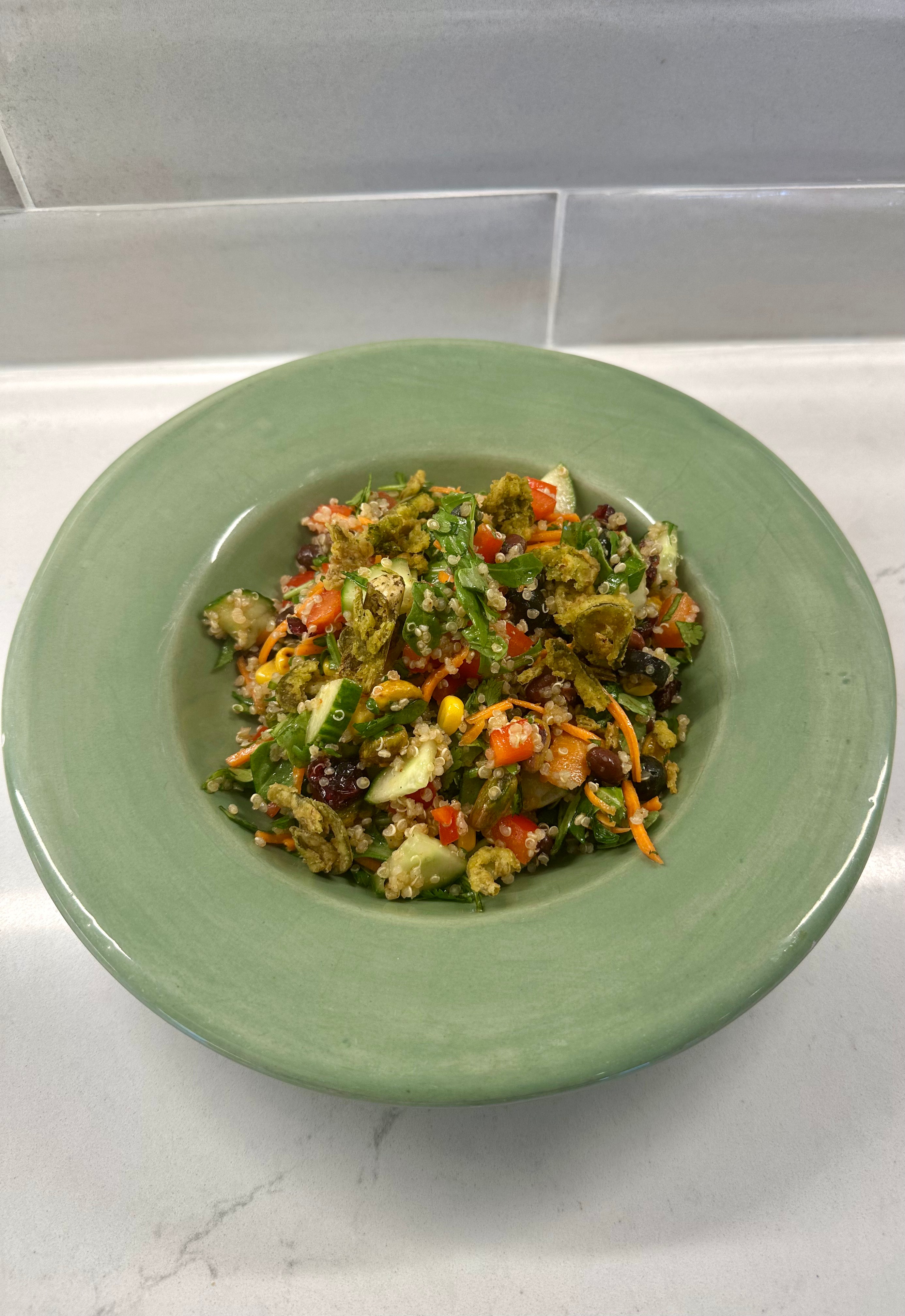
No, I don’t mean Skittles. It is recommended that we include 30 different plant products (vegetables, fruits, beans, grains, and seeds) in our diet each week. Our microbiome thrives on variety, so if we’re eating a high quantity of vegetables, but they are the same 3 or 4 veggies day in and day out, we are depriving our microbiota of the diversity it needs. Remember, we want a wide array of bacteria – the more diverse the better! Different types of bacteria are going to develop and thrive with different nutrients, so in feeding them that variety we are encouraging them to flourish.
Additionally, keep it clean, Friends! Keep your diet free of processed foods and chemicals that kill our microbiota. Focus on real, whole foods with plenty of fiber, color, and pure proteins. Minimize refined sugars. Feed your microbiome the way you would feed your kids on your best “super mom” day!
Probiotics
Probiotics are exactly what the name implies – they’re like fuel for our microbiota. I highly recommend taking a good probiotic supplement.
Additionally, consuming fermented foods makes our microbiomes extra happy. Some good exampts of fermented foods include:
- Kefir milk – fermented milk. I put it in my smooties!
- Yogurt – Greek yogurt is not only full of probiotics, but it is a great source of protein.
- Kimchi / Saerkraut
- Sourdough bread – delicious bread full of probiotics – yes, please!
- Kambucha
- Miso / Tempeh
- Pickled cucumbers or other pickled veggies
Move Your Body
Exercise supports our gut motility, allowing our food to move through our digestive tract efficiently. Exercise promotes diversity of bacteria in our microbiome. It also reduces stress, which reduces our cortisol levels. Release of Cortisol triggers our body’s flight or fight response, which triggers our arch enemy – inflammation.
Sleep
A healthy microbiome supports our sleep. Those happy microbiota thank us by producing the neurotransmitters Serotonin and GABA, which promote high quality sleep.
Conversely, poor sleep negatively impacts our gut health, causing:
- Proliferation of harmful gut bacteria
- Increase in Cortisol levels
- Reduced immune function
Reduce Stress
We are now aware that stress causes the release of cortisol, and cortisol causes inflammation . . . and inflammation is our nemesis. So we are going to do all we can to reduce our stress. We’re going to take those walks in nature, journal, meditate, and practice mindfulness. Let’s do “all the things” and actively incorporate them into our day to support our mental health, our life balance, and keep our microbiata happy and thriving!
Just Keep Doing The Best You Can
Friends, Elevated Nesting is focused on Healthy Aging, and this topic really ties it all together. If you have anything to add or any questions, please reach out in the comments section or email me directly. If I don’t know the answer, you can be sure I’ll want to research the heck out of it!
Thank you so much for kicking your week off with me! Here’s to sharing a renewed commitment to a flourishing microbiome!!
Resources:
The brain-gut connection. Johns Hopkins Medicine. (2024b, June 20). https://www.hopkinsmedicine.org/health/wellness-and-prevention/the-brain-gut-connection
Ullah, H., Arbab, S., Tian, Y., Liu, C., Chen, Y., Qijie, L., Khan, M. I. U., Hassan, I. U., & Li, K. (2023, July 7). The gut microbiota–brain axis in neurological disorder. Frontiers. https://www.frontiersin.org/journals/neuroscience/articles/10.3389/fnins.2023.1225875/full